

What Is a Social Media Scheduler and Why You Need One in 2026
If you’re trying to stay visible online in 2026, you already know how exhausting daily posting can feel. One day you’re consistent, the next day you forget. Algorithms don’t wait. Audiences don’t pause. That’s exactly where a social media scheduler changes the game.
Instead of scrambling every morning, you use smart social media scheduling tools to organize content through proper content calendar management and structured automated post publishing. With smooth cross-platform posting and reliable social media automation, your brand shows up even when you’re busy running your business. It’s not about posting more. It’s about posting smarter, building trust, and finally taking control of your time.
What Is a Social Media Scheduler?
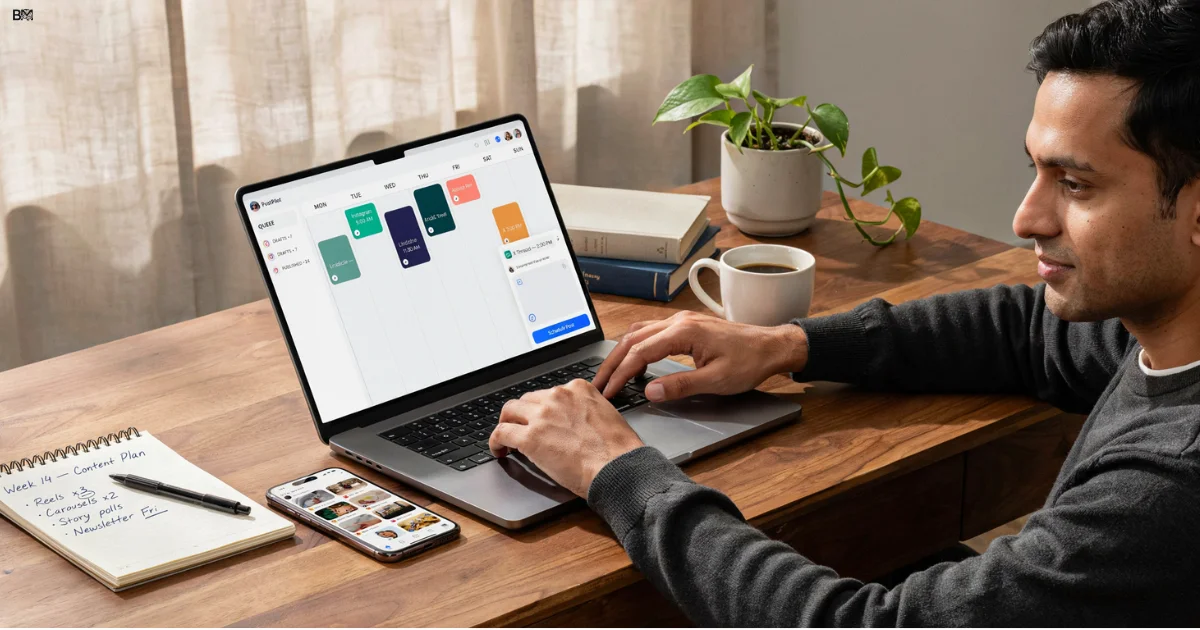
A social media scheduler is a tool that lets you create content now and publish it automatically later. Instead of logging into every platform daily, you use social media scheduling tools that handle automated post publishing from one central place. It simplifies serious content calendar management.
Inside the system, you load posts into a content queue system, organize your cross-platform posting, and build structured social media automation. This allows you to manage multiple social accounts without confusion. Your entire publishing workflow becomes predictable instead of chaotic.
Here is what a scheduler actually replaces:
- Daily manual logins
- Last‑minute posting
- Forgotten promotions
- Inconsistent timing
- Messaging errors
Instead of guessing, you operate with intention.
How Does a Social Media Scheduler Work Behind the Scenes?

Behind the clean interface, a social media scheduler connects securely through API integrations. These systems connect social media APIs so your posts go live exactly when scheduled. No guessing. No manual effort at posting time.
Everything runs through a central social media dashboard. Strong post scheduling software studies patterns and suggests smart posting times. It helps you discover the best time to post on social media based on actual behavior. With features like bulk post scheduling, you can prepare weeks of content at once and fully automate social media posting.
Most people don’t realize that good schedulers also:
- Store media assets in one place
- Track post performance across channels
- Support draft approvals
- Protect login credentials
- Reduce accidental posting errors
It’s not magic. It’s structured automation.
Why Social Media Scheduling Is Essential in 2026
The U.S. market is crowded. Every brand competes for attention. If you do not schedule posts in advance, your visibility drops. Algorithms reward consistency. Inconsistent posting weakens reach.
A structured social media scheduler allows you to optimize posting frequency while maintaining quality. With a strong editorial content calendar and focused social media campaign planning, you can systematically increase audience reach.
In 2026, brands that treat social media like a system win. Brands that treat it casually fall behind.
Table 1: Manual Posting vs Social Media Scheduler
| Factor | Manual Posting | Social Media Scheduler |
| Time Needed | Daily effort | Weekly batch work |
| Consistency | Unstable | Planned |
| Team Access | Scattered | Multi-account management |
| Analytics | Separate tools | Centralized social media analytics |
| Scaling | Hard | Easy |
Top Benefits of Using a Social Media Scheduler
Time is your most limited resource. A social media scheduler acts as one of the strongest time-saving tools available. Many small businesses regain 8–12 hours weekly. That reclaimed time can be invested in strategy or product development.
Another benefit is emotional relief. Consistent automation helps reduce social media burnout. Instead of constant pressure, you work in batches. With clear audience engagement tracking, you can track engagement metrics and analyze performance data logically. That clarity helps you improve your social media strategy and maintain brand voice consistency.
Here is what improves when you use a scheduler:
- Posting consistency
- Data visibility
- Campaign timing
- Content balance
- Stress levels
The improvement compounds over time.
Key Features to Look for in the Best Social Media Scheduling Tools

A powerful social media scheduler should include an approval workflow system. This keeps your social media approval process clean before posts go live. It prevents embarrassing mistakes.
Look for strong recurring post scheduling and flexible content calendar management. A professional social media management tool must allow you to scale social media operations and confidently manage enterprise social workflows if growth happens.
Essential features include:
- Media library storage
- Scheduling previews
- Role‑based permissions
- Analytics reporting
- Cross‑team collaboration
If it only posts content, it is incomplete.
Social Media Scheduler vs Manual Posting: What’s the Difference?
Manual posting depends on memory. It depends on availability. It depends on the mood. That instability creates inconsistency. There is no real social media automation system controlling the flow.
A strong marketing automation platform built into a social media scheduler creates stability. Through bulk post scheduling and organized audience engagement tracking, you gain control. Over time, consistency increases trust.
Manual posting reacts. Scheduling plans.
Table 2: Cost Breakdown in the U.S.
| Plan Type | Average Cost | Best For |
| Free | $0 | Beginners |
| Starter | $15–$39 | Small brands |
| Professional | $49–$149 | Growing teams |
| Enterprise | $300+ | Large companies |
If you are searching for the best social media scheduler for small businesses in 2026, mid‑tier pricing often delivers serious value without enterprise cost.
How to Schedule Social Media Posts (Step-by-Step Guide)
Start by reviewing your existing content habits. Identify gaps. Then build a clear editorial content calendar. Load content into your social media scheduler and schedule posts in advance across platforms.
After publishing begins, monitor results weekly. Use data to optimize posting frequency and steadily build a consistent online presence. This structured method helps you naturally increase audience reach without increasing effort.
Core steps usually include:
- Define content themes
- Upload posts in batches
- Set publishing times
- Review performance weekly
- Adjust monthly
Systems remove chaos.
Best Social Media Scheduler Tools Compared (Pricing + Use Cases)

Different tools serve different needs. Some focus on creators. Others are built for agencies. Advanced social media scheduling tools allow flexible cross-platform posting while keeping customization options.
The strongest systems help you integrate CRM with social media so sales teams see direct impact. When publishing, tracking, and reporting are all in one social media dashboard, growth decisions become easier.
Table 3: Popular Tool Comparison
| Tool | Best For | Strength |
| Buffer | Small teams | Easy interface |
| Hootsuite | Agencies | Strong analytics |
| Sprout | Enterprise | Deep reporting |
| Later | Visual brands | Instagram focus |
How to Choose the Right Social Media Scheduler for Your Business
The right social media scheduler depends on your structure. A freelancer needs simplicity. A team requires structured multi-account management. Larger brands demand a strict approval workflow system.
Choose based on future goals. A platform that supports scaling protects you from having to switch tools later. Growth without structure creates confusion.
Common Mistakes to Avoid When Using a Social Scheduler

Over‑automation is the most common mistake. Even the best social media scheduler cannot replace human conversation. Automation handles publishing. Humans handle connection.
Another mistake is ignoring numbers. If you fail to analyze performance data, you cannot improve. Strong social media analytics must guide your decisions.
Common errors include:
- Posting identical content everywhere
- Ignoring comments
- Never updating old promotions
- Not testing new formats
- Skipping monthly reviews
Avoid these, and performance improves.
How to Measure ROI from Social Media Scheduling
To measure social media ROI, use this formula:
ROI = (Revenue – Tool Cost) ÷ Tool Cost × 100
If you invest $50 monthly and generate $1,000 in revenue traced from scheduled campaigns, the numbers speak clearly. When you consistently track engagement metrics and connect CRM data, you see which content produces real business outcomes.
Table 4: Key Metrics to Track
| Metric | Why It Matters |
| Engagement Rate | Shows content quality |
| Click Through Rate | Traffic growth |
| Leads Generated | Sales potential |
| Revenue | Real impact |
Balancing Automation and Real-Time Engagement

Automation should support you, not replace you. A powerful social media scheduler enables structure while leaving space for live interaction.
Use automation for consistency. Use direct responses for authenticity. That balance strengthens trust and supports smart social media automation without losing personality.
Is a Social Media Scheduler Worth It?
For most U.S. businesses, the answer is clear. Yes. A social media scheduler saves hours, improves structure, and supports measurable growth. It helps you build a consistent online presence without daily stress.
Compared to the time saved and stability gained, the investment is small. In 2026, structured brands outperform reactive ones.
FAQs
Does a social media scheduler reduce engagement or reach?
No — when used correctly, a social media scheduler actually improves consistency, which algorithms reward and audiences trust.
Is a social media scheduler safe for business accounts?
Yes, trusted tools use secure API connections, so your data stays protected while posts are published automatically.
What is the best social media scheduler for a small business in 2026?
The best choice balances affordability, automation features, and analytics without overwhelming small teams.
Can I still engage in real time if I use a scheduler?
Absolutely — automation handles publishing, while you stay free to reply, comment, and build real relationships.
How quickly can I see results from using a social media scheduler?
Most brands notice better consistency and clearer performance insights within the first 30 days.
External Resources
https://sproutsocial.com/insights/social-media-scheduling-tools
https://monday.com/blog/productivity/social-media-scheduling